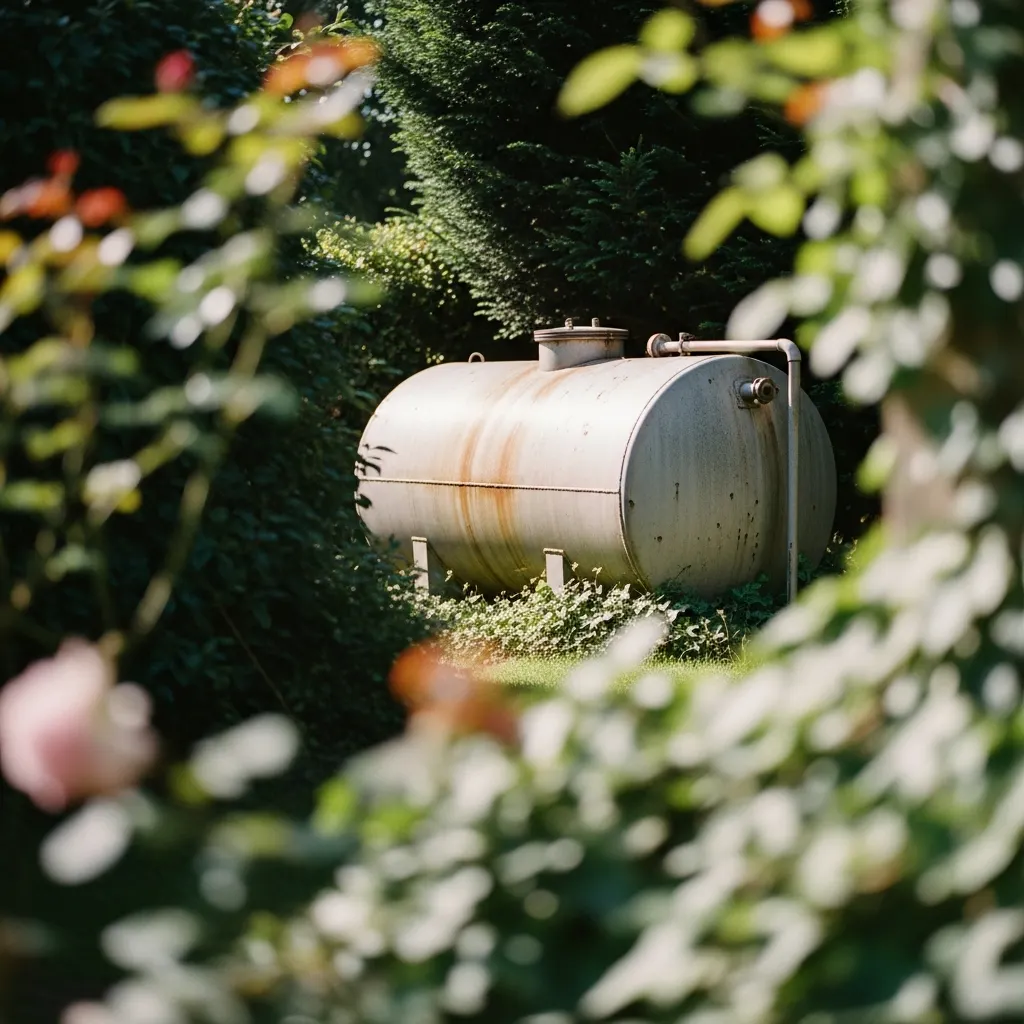
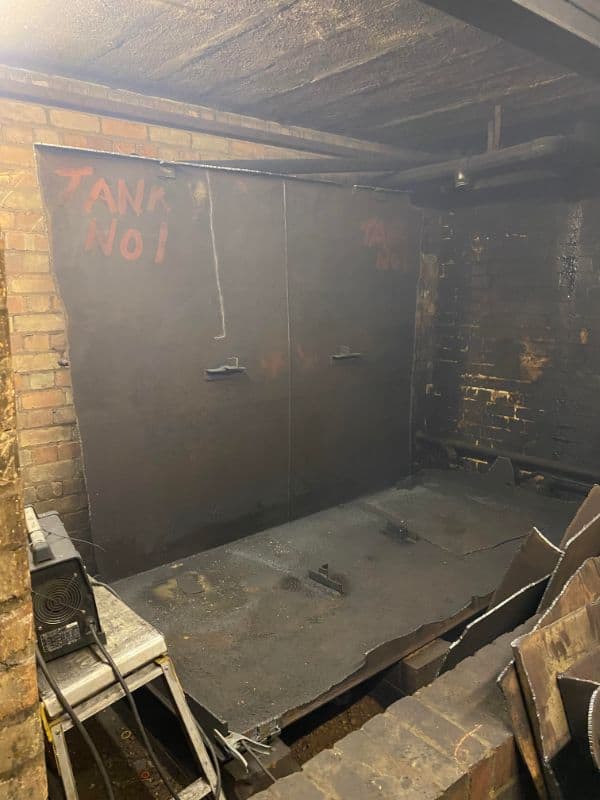
The removal of an industrial or commercial storage tank is a highly regulated process, requiring controlled engineering operations.
Before commencing with cutting, lifting or sectioning of the tank, the tank needs to be thoroughly cleaned and then certified as "gas-free" before any form of mechanical intervention or hot works takes place in relation to the tank's interior.
Any residual product, vapour, sludge or contaminants within the tank represent significant safety and environmental hazards and need to be managed appropriately. The gas-free certification represents a documented proof of the safe internal atmospheric conditions within the tank for mechanical intervention, hot works and personnel exposure (where applicable).
Residual Hazards Inside Redundant Tanks
Although a tank may have been completely drained or isolated from all hazardous materials, there still exist many potential hazards:
- The vapour (flammable) that is trapped in the piping and inside the tank
- A product that was left in the tank to absorb in the sludge, residue, and coating of the tank
- Toxic gases that are produced by microorganisms and the degradation
- An oxygen deficient atmosphere that results from displacement and/or corrosive processes
- Hazardous materials that have contaminated the washing water and residue.
Many of these hazards exist "underground" and/or cannot be safely determined as a viable hazard until you have completed a controlled test for the determination and cleaning of the tank. A safe assumption cannot be made based upon how it appears, nor based upon its past use.
Ignition Risk During Cutting and Lifting Operations
Removal of tanks typically includes some hot works, which include welding, cutting, grinding, and/or thermal sectioning of materials. Even at low concentration levels, gas vapour can be ignited by sparks or high temperature conditions.
In addition to hot work activities, lifting or moving of tanks can cause disturbance in residues of liquids left inside tanks, creating trapped gases that may enter an area with limited ventilation or enclosed areas. The risk of ignition is not controlled without verifying that the atmosphere is safe to work in.
A Gas-Free certification will provide confirmation that all combustible gas concentrations have been reduced to below explosive limits, and there is adequate oxygen present to allow for a safe working environment.
Confined Space Safety Considerations
Many tanks are classified as confined spaces due to their limited and restrictive access points, along with little to no natural ventilation; therefore, when an operative enters a tank without first verifying that the atmosphere inside the tank is safe for entry, they will be exposed to the potential hazards of:
- Asphyxiation
- Inhalation of toxic gases
- Losing consciousness
- Having delayed access for rescue
Cleaning and gas-free testing reduces or eliminates all of the above mentioned hazards while allowing an operator to enter a tank only in situations which have been demonstrated to be both safe and under adequate control.
Environmental Protection and Waste Control
If a contaminant is not removed before it is cut, lifted, or transported, then it can easily be released into the environment when it escapes (e.g., through spillage, uncontrolled washing, or vapour) and will provide a potential for environmental liability and potentially create additional costs for future remedial action.
Cleaning of contaminated soil with control:
- Eliminates the risks associated with mechanically handling contaminated materials.
- Removes contaminants from the material that may pose a health risk
- Permits the correct classification of generated waste for proper transportation to designated disposal sites
- Decreases the risk of releasing additional contaminants into the environment.
This protects the site, its surroundings, and the duties of the responsible party.
Regulatory Expectations and Compliance
Multiple regulatory frameworks influence the requirement for cleaning and gas-free certification, including:
- Dangerous Substances and Explosive Atmospheres Regulations (DSEAR)
- Confined Spaces Regulations
- Health and Safety at Work legislation
- Environmental duty of care obligations
- Construction (Design and Management) Regulations, where applicable
While regulations do not prescribe a single method, they require duty holders to eliminate or control foreseeable risks. Gas-free certification provides objective evidence that explosive and atmospheric hazards have been managed appropriately before mechanical intervention.
What Gas-Free Certification Confirms
Gas-free certification typically verifies:
- Oxygen concentration within a safe operating range
- Absence of flammable vapours above lower explosive limits
- Absence of toxic gases above exposure thresholds
- Stability of atmospheric conditions during monitoring
- Suitability for specified work activities
Certification is issued following controlled cleaning, ventilation, and atmospheric testing using calibrated equipment and competent personnel.
Sequencing, Cleaning, and Certification Within Removal Projects
In compliant tank removal programmes, the typical sequence is:
- Isolation of the tank and associated pipework
- Controlled cleaning to remove residues and sludge
- Ventilation and atmospheric stabilisation
- Formal gas-free testing and certification
- Controlled cutting, lifting, and removal
- Waste handling and disposal
- Documentation and handover
This sequencing prevents uncontrolled exposure and supports predictable project delivery.
Avoiding Shortcuts and Informal Assumptions
Skipping cleaning or relying on informal gas checks increases exposure to:
- Fire and explosion risk
- Personnel injury
- Regulatory enforcement
- Insurance invalidation
- Project delays and unplanned remediation
Formal certification removes ambiguity and establishes clear accountability.
Integrating Gas-Free Certification Into Project Planning
Ensure that Gas-Free Certification is included in both your Method Statement & Programme so it isn't viewed as a "bolt-on" afterthought.
Allowance needs to be made for:
- Duration of Cleaning
- Time required for ventilation
- Additional testing due to changing Atmospheric Conditions
- Planning Access
- Site Constraints/Weather Conditions
In order to ensure safe sequencing and prevent disruption to the Programme.
Supporting Safe Tank Removal
Bio Clean Jetting offers controlled industrial tank cleaning with formal Gas Free Certification for industrial tanks as part of compliant tank decommissioning and disposal programmes across the United Kingdom.
All works will be planned and carried out with Safety, Atmospheric Control, Environmental Protection and documented Verification before Mechanical Intervention.
Contact us to start a Controlled Scope of Work for either a Requirement or to arrange an Assessment.