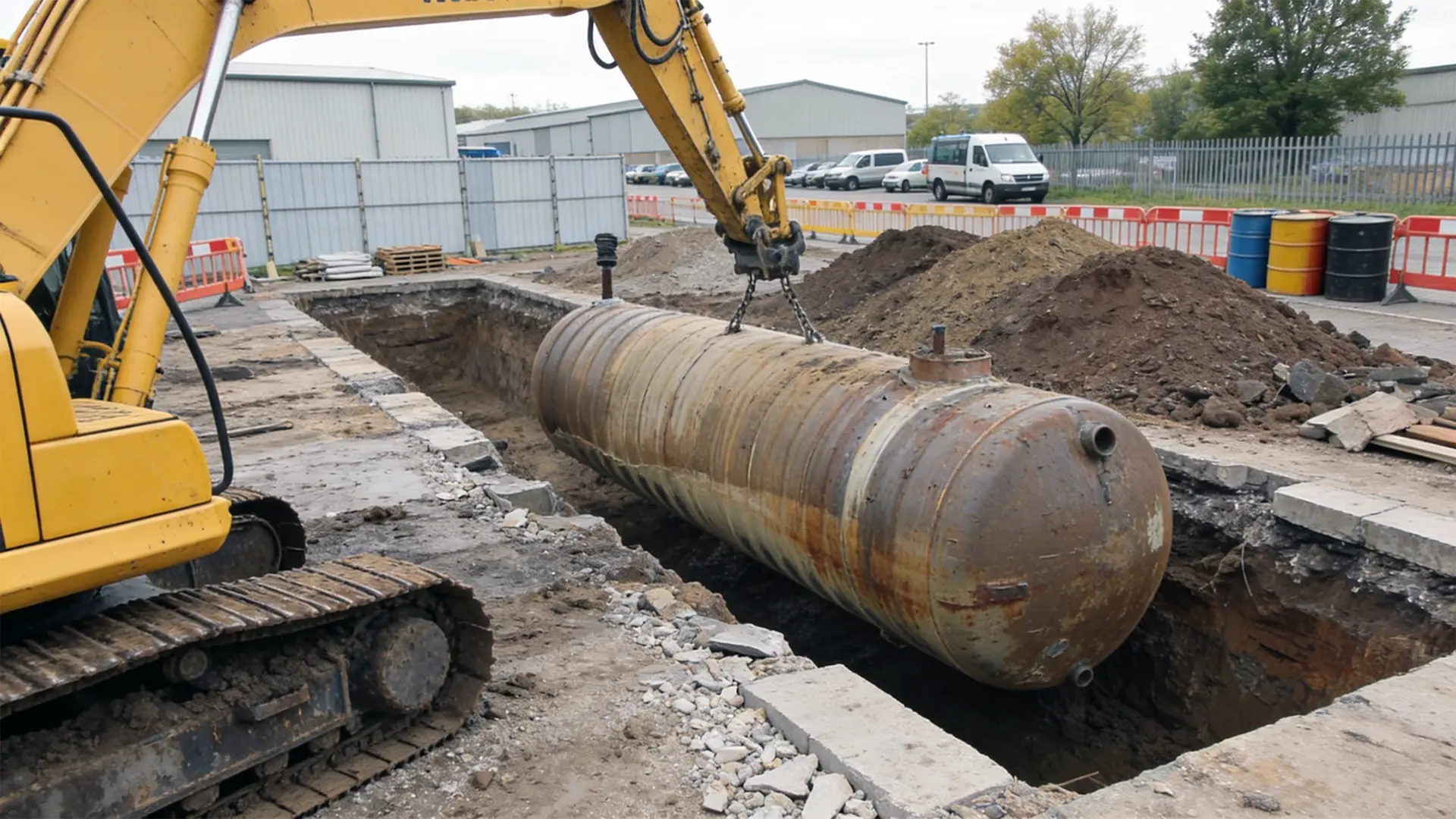
What Legal Responsibilities Apply When Removing Industrial and Commercial Tanks in the UK
Obligations legally bind the removal of industrial and commercial storage tanks; these duties are applicable regardless of whether a tank is being decommissioned, cut up, lifted, or otherwise completely removed from the site. Failure to comply with these obligations will place duty-holders at risk of accidents/safety incidents, environmental damage, regulatory enforcement, delay of projects, and potential long-term liabilities.
Removing an industrial/commercial storage tank is far from just a mechanical operation. The removal of an industrial/commercial storage tank is a regulated process that may involve hazardous residue(s), confined space operations, the classification of waste, the provision of lifting operations, and the protection of the environment. Compliance with regulations should therefore be included as part of the project's planning, execution, documentation, and disposal processes.
This article provides information on the key legislation that relates to the removal of industrial/commercial storage tanks in the UK, and how compliance for such projects is usually achieved.


Duty of Care Under Environmental Law
It is an organisation's responsibility as a producer of waste through the removal of tanks to handle, transport, and dispose of this waste in compliance with the Duty of Care. The producer's responsibility is maintained until final disposal occurs at a licensed site.
The most common types of waste generated from tank removal are:
- Sludges, residue and washes from tank contents
- Contaminated water
- Various parts of the steel or composite tank
- Absorbers and contaminants from tank and equipment cleaning
All of these types of wastes must be evaluated, assigned a waste classification and be moved by licensed hauliers. An accurate and complete waste transfer note or hazardous waste consignment note must be prepared and kept on file for auditing.
Proper classification, documentation and the use of licensed hauliers will help protect you from enforcement actions and liability due to your position as the original Duty Holder.
Health and Safety at Work Obligations
The Health and Safety at Work Etc. The Act puts an obligation upon Employers & those with control over premises to have measures in place to prevent injury to employees and other persons. Tank removal can present many foreseeable hazards, such as:
- flammable vapours and residual product
- oxygen deficient or contaminated atmosphere
- confined space entry
- hot works & cutting operations
- lifting & structural instability
- chemical exposure
Duty Holders shall ensure all risk assessments have been conducted and all relevant controls and management procedures are in place, which will include method statements, permits, competence management & supervision. Contractors must also provide evidence of their own training, equipment and safe system of work.
Simply having appointed a contractor does not automatically transfer responsibility. The Client remains responsible for the competency of contractors and ensuring that there is adequate provision for safe working practices.
Confined Spaces Regulations
Most tanks are classified as a type of confined space. The dangers of entering a tank include toxic atmospheres, low oxygen levels, flammable vapours, and limited accessibility in the event of an emergency.
If tank entry is necessary, the regulations demand that:
- A proper and adequate risk assessment should be conducted
- An entry permit will be issued, and access controls will regulate the process
- Continuous atmospheric testing and ventilation occur
- Rescue procedures for emergencies are established and implemented
- Only competent workers enter the tank under the supervision of a qualified person
Compliant construction practices can minimise or eliminate the need for confined space entry through the use of remote cleaning and controlled removal systems.
Dangerous Substances and Explosive Atmospheres (DSEAR)
Vapours present in storage tanks and pipework may form an explosion hazard. The process of hot working (cutting, grinding, welding) represents a source of ignition.
The assessment and control of hazardous explosive conditions are required under DSEAR to provide a safe work environment. For this reason, in practice, many of the following activities will occur:
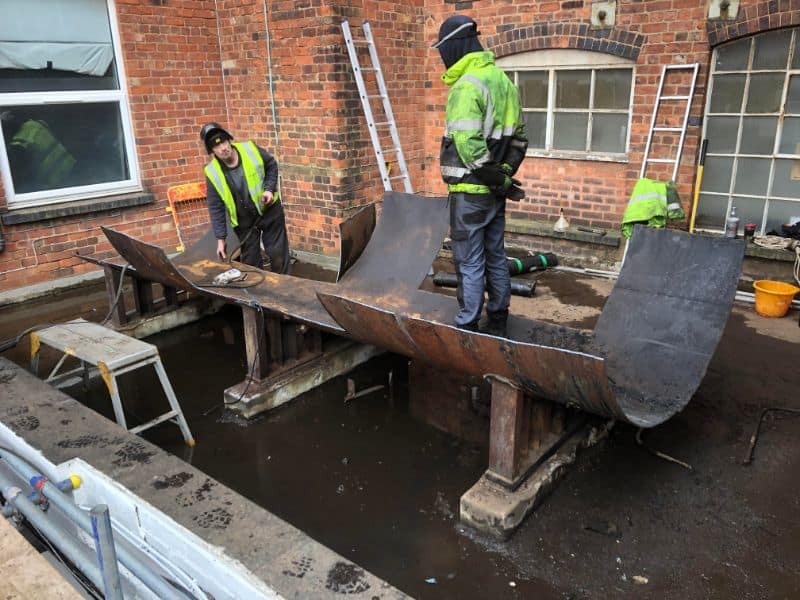
- Clean the vessel before commencing hot work activities and obtain gas free certification
- This is typically achieved through controlled industrial tank cleaning and atmospheric testing before mechanical intervention
- Monitor the atmosphere continuously for the presence of flammable gases
- Establish procedures for controlled ignition of sparks/flames
- Employ cold cutting techniques wherever feasible
- Create exclusion zones and permit systems
Documentation of gas-free certification provides written evidence that the tank atmosphere has been proven to be suitable for all mechanical operations to proceed safely.
Construction (Design and Management) Regulations
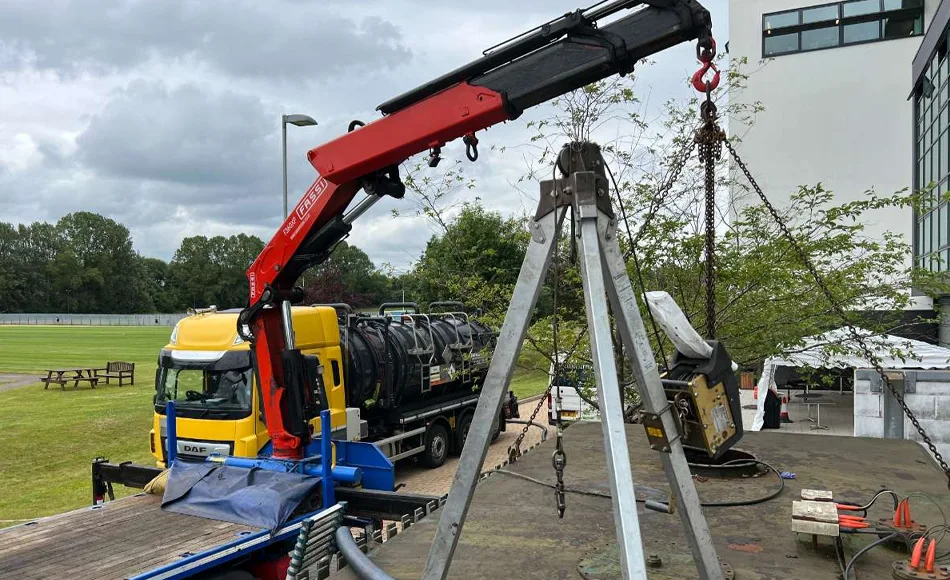
Typically, tank removal projects will be covered by Construction Design & Management (CDM), in particular when lifting work, demolition work or structural alterations are undertaken.
The CDM regulations require the appointment of competent duty holders; appropriate construction phase planning; risk coordination between contractors; safe sequencing of works; site inductions and welfare arrangements, etc.
However, clients remain legally responsible for ensuring that their project is properly planned and resources allocated appropriately.
Environmental Protection and Land Contamination
The removal of tanks should be done in a manner to avoid contaminating both the land, groundwater, surface water and drainage systems. The improper disposal of spills or release from a tank can cause an investigation to occur and require remediation as well as long term liability.
Standard environmental controls used are:
- secondary containment and spill control
- ground protection
- drain separation
- regulated waste management
- planning for incident response
If contamination is found during the tank removal process, the tank owner/ operator will have additional obligations (further evaluation and remediation).
Waste Transport and Carrier Licensing
Only registered waste carriers may transport controlled waste. Duty holders must verify carrier registration and disposal site licensing before waste leaves the site.
Records must demonstrate:
- Correct classification
- Licensed carrier details
- Approved disposal destination
- Traceability of movements
Failure to verify carrier credentials exposes clients to joint liability.
Documentation and Record Retention
Compliant tank removal produces a documented audit trail, which may include:
- Risk assessments and method statements
- Gas-free certificates
- Waste transfer or consignment notes
- Lifting plans
- Completion records
These documents support regulatory compliance, insurance requirements, property transactions, and future site management.
Practical Compliance in Tank Removal Projects
Legal compliance is achieved through structured planning and controlled execution rather than reactive decision-making.
Well-managed projects typically include:
- Pre-removal surveys and hazard assessment
- Defined cleaning and gas-free processes
- Controlled cutting and lifting methodology
- Segregated waste management
- Clear documentation and handover
This approach reduces operational risk, protects duty holders, and ensures predictable project delivery.
Arranging Compliant Tank Removal
Bio Clean Jetting delivers industrial tank removal and decommissioning services across the UK. Projects are planned around safety, compliance, and controlled execution, with complete documentation and responsible waste management provided as standard.
To discuss a tank removal requirement or arrange an assessment, contact Bio Clean Jetting to initiate a compliant scope of work.