Domestic & Heating Oil Tank Removal Specialists
At Bio Clean Jetting, we offer comprehensive heating oil tank removal services to clients across the UK. We will remove your domestic oil tank system in a safe and methodical manner, complying fully with all current environmental laws and regulations.


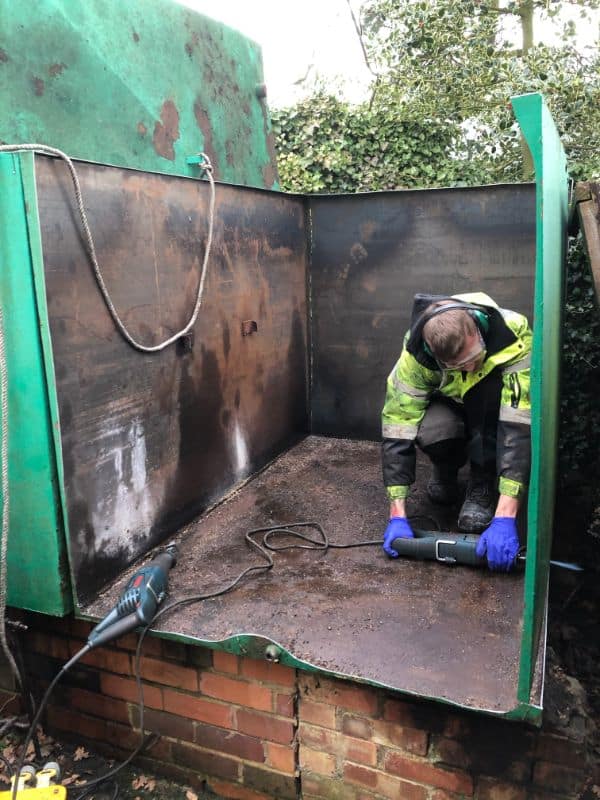
The older your oil tank is, the greater the potential for it to become an issue. With changes to heating systems, when you sell your house or at the end of its useful life, it is usually best to have the tank removed. Older heating oil tanks can rust from the inside out, without giving any obvious signs that this has occurred. If left in situ, these tanks pose both an environmental hazard and cause inconvenience with regards to surveys or property transactions.
Heating oil tanks that have been in service for years were not built to last forever. The possibility of structural failure (i.e., the tank cracks and leaks) is increased by corrosion, retained fuel, and a lack of maintenance. Early signs can include long-term oil odours near the tank, staining at the bottom of the tank, or loss of fuel without an apparent explanation.
Beginning with an initial on-site survey at Bio Clean Jetting, our team will oversee all aspects of removing your oil tank, including removal, legal documentation and disposal of the fuel, residue and tank material that we collect, utilising the best technology and the expertise of our experienced staff.
For broader storage tank removal and decommissioning capability, see our Tank Removal & Decommissioning Services page.

When Removal Becomes Necessary
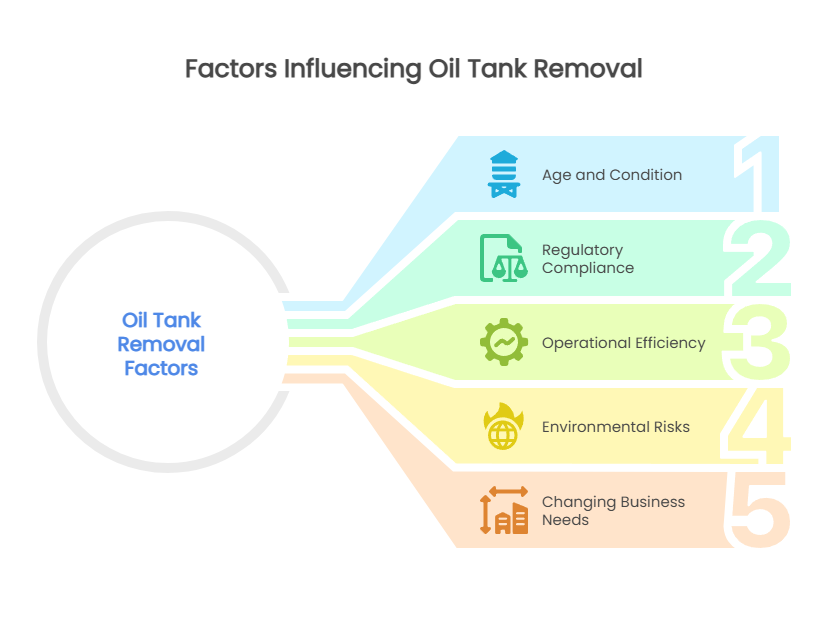
Removing an oil tank generally becomes necessary when:
- A homeowner disconnects their home's oil tank because it is no longer connected to a boiler.
- A homeowner changes their home heating system from oil to natural gas or renewable energy sources.
- An oil tank demonstrates signs of deterioration (cracks) or oil leakage.
- The oil tank has remained in storage for a number of years with no use.
- During site investigation or excavation work, an oil tank is discovered located underground.
- An owner wants to replace the existing oil tank with a new one.
Contamination of soil and groundwater by leaking oil tanks can become very expensive. Removing an oil tank early on will minimise potential long-term environmental exposure and avoid problems associated with selling or developing a property.
Types of Tanks We Remove
We undertake the removal of:
- Domestic oil tank installations
- Plastic oil tanks
- Steel and metal heating oil tanks
- Underground oil tank systems
- Basement storage tank units
- Small commercial heating oil tanks
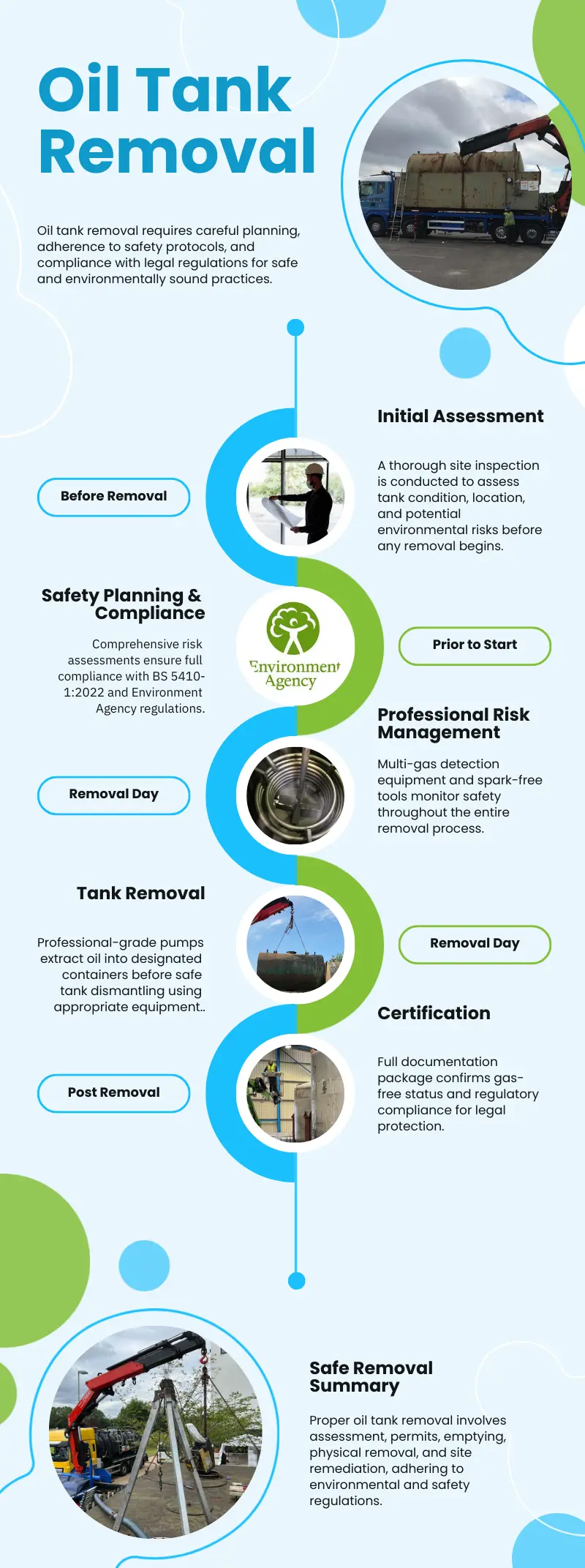
The Removal Process
Domestic oil tank removal follows a structured and controlled procedure.
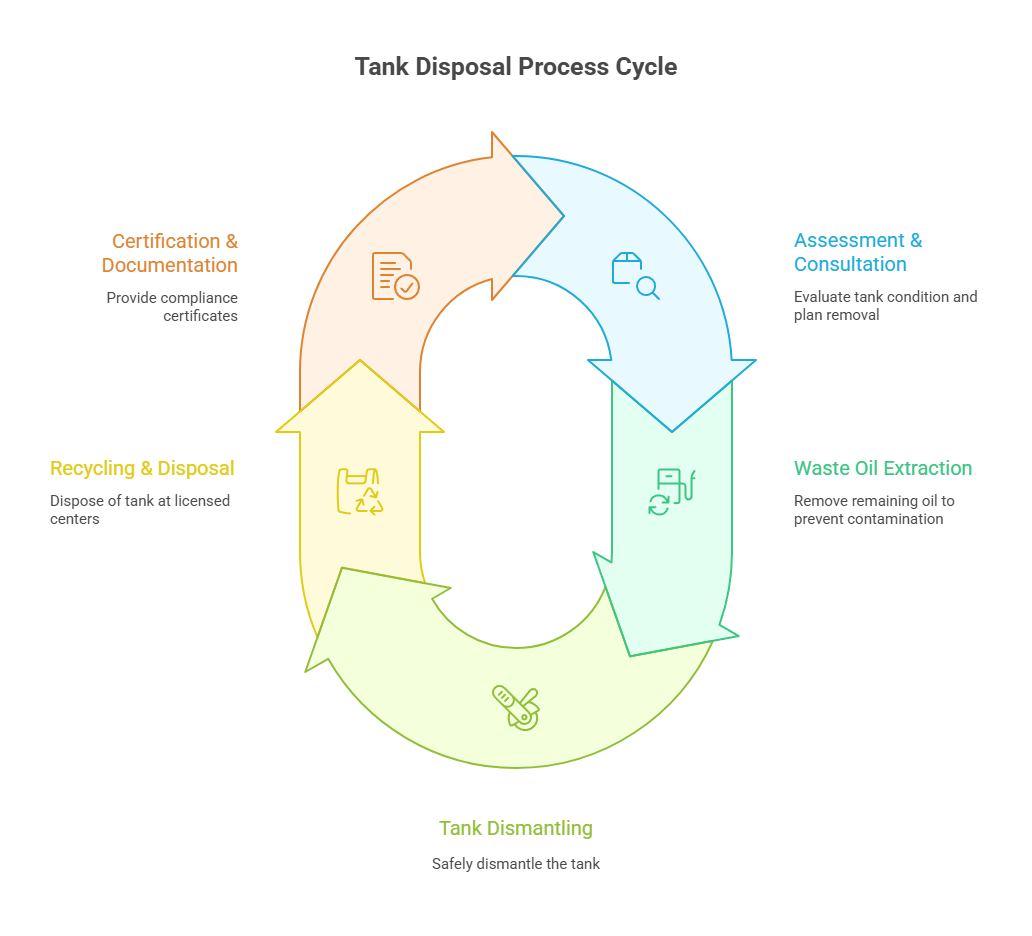
The normal process for removing an Oil Tank from a Property typically includes:
- Assessment of site and isolation of pipework, vent pipes and connection points to oil supplies.
- Remaining Heating Oil measured and transferred to approved holding containers.
- Cleaning and purging the Oil Tank to remove hazardous liquids and gases.
- Disconnecting services.
- Lift out or sectionally dismantle as appropriate for access to the area.
- Dispose of the Oil Tank and its contents (hazardous) in accordance with the law through an Authorised Disposal Facility.
All Oil Tanks must be decontaminated (cleaned) and made safe (gas free) before either transportation or disassembly. This is mandatory. Removing an Oil Tank properly will minimise the potential for fire, prevent pollution to the environment, and ensure that all hazardous waste is disposed of properly.
Underground Oil Tank Removal
Underground oil storage tanks pose an added hazard. Older homes may have underground heating oil tanks, which are in a state of deterioration; the tanks may be deteriorating or damaged without being easily detectable.
In many cases, excavation equipment will be needed to expose the tank safely. The tanks may also have previously had inert materials pumped into them as part of the decommissioning process. Each situation is evaluated individually. Ultimately, the scope of work will depend upon factors like the depth at which access can be achieved, the type of soils encountered and the structural integrity of the tank.
Where leakage is suspected, soil checks may be undertaken to assess potential contamination before backfilling.
Domestic Oil Tank Removal – Residential Sites
Domestic Removals are typically carried out within a garden, driveway, or other restricted area, so the removal process mustn't damage the local surroundings, such as structures and landscaping. The initial stages of removal also consider access restrictions to ensure safe removal methods can be used.
In many cases where access to the oil tank is restricted, the tank will need to be removed whole from the site (if possible) or divided into smaller parts for removal, using carefully controlled cutting equipment to avoid creating sparks. For basement installations, we provide all necessary ventilation controls, and the operatives have the training and experience to work safely in confined spaces to prevent accidents.
Professional oil tank removal provides a compliant and controlled solution for disposing of potentially hazardous household infrastructure.
Get in Touch
Our Customers
Homeowners
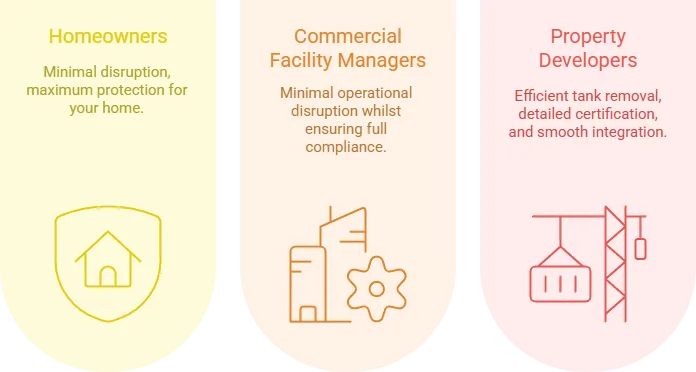
Careful planning is needed to coordinate the removal of oil tanks from residential homes. In doing so, we will ensure that all works will be conducted in a way which minimises disruption to residents whilst maintaining safe working practices and environmental controls.
We fully manage works, from an initial assessment to final disposal. Documentation, specifically waste transfer notes, etc., is provided as required to clients (e.g. for property sales) when removing tanks.
Commercial Facility Managers
Where heating oil tanks are positioned on a mixed use or small commercial development, we schedule the work to minimise operational disturbance to the business.
All compliance documentation will be provided as part of the service and can be retained as part of the record of works for any future inspection.
Property Developers
Heating Oil Tanks are often found when there is a redevelopment or refurbishment project. Our team provides an efficient removal service which enables the developer to safely move forward with the next phase of their building project.

Disposal and Recycling
Heating oil is classified as hazardous waste and must be disposed of under a waste oil licence and in accordance with environmental legislation.
Our oil tank removal service provides:
- The removal and transport of waste oil by licenced operators
- Contaminated fuel to authorised disposal facilities
- Plastic and steel materials from oil tanks are properly recycled
- Hazardous residues are managed in compliance with regulations
- Transfer notes are issued for property records
Professional removal ensures full traceability from site to authorised facility.
Cost of Oil Tank Removal
The cost of removing a heating oil tank varies depending on the size of the tank, the amount of oil left inside, where the tank is located relative to other buildings, etc., as well as whether it is buried (underground) or exposed (above ground).
Figures vary by access, tank contents, contamination risk and whether excavation is required. Accurate pricing is confirmed after assessment. Underground oil tank removals will typically be more expensive than above-ground oil tank removals because of the increased labour and equipment needs to safely remove and dispose of the oil tank and excavate to reach the buried tank.
Accurate prices are given after we assess your location.
Oil Tank Assessment
Answer a few questions to determine if your oil tank needs removal
Can You Remove it Yourself?
Removing your heating tank yourself isn't generally a good idea. The chemicals involved are classified as hazardous; improperly handled can lead to contamination of land and water sources, create a potential fire hazard, or result in an environmental violation by you.
Having a professional remove your heating oil tank ensures that it is removed properly with no leakage, the tank is thoroughly cleaned and purged, and the material is taken to a disposal site approved by the appropriate authorities.
Find out more about legal responsibilities for tank removal.
Decommissioning Services
In some instances, a decommissioning of an oil tank can be performed when a complete removal is either unnecessary or impractical. Once the tank has been drained, the tank will then be made safe to remain on site.
However, the most common long term method for addressing an oil tank is through its total removal from the premises, especially where there are plans to sell the property, redevelop the land or liability concerns arise.
Find out why tanks must be cleaned and gas freed before removal.
Real-Life Case Studies & Success Stories

Large Tank Disposal in Birmingham
This challenging project involved the removal and decommissioning of a large industrial tank, which was successfully completed with minimal disruption and full compliance.
The operation involved careful planning, safe extraction of all oil and contaminants, and precise dismantling to protect the site and reduce downtime. All waste, including the old tank, was taken to licensed recycling centres for responsible disposal.
This demonstrates our commitment to safe and eco-friendly oil tank removal in demanding industrial settings.
Tank Decommissioning in Newcastle-under-Lyme
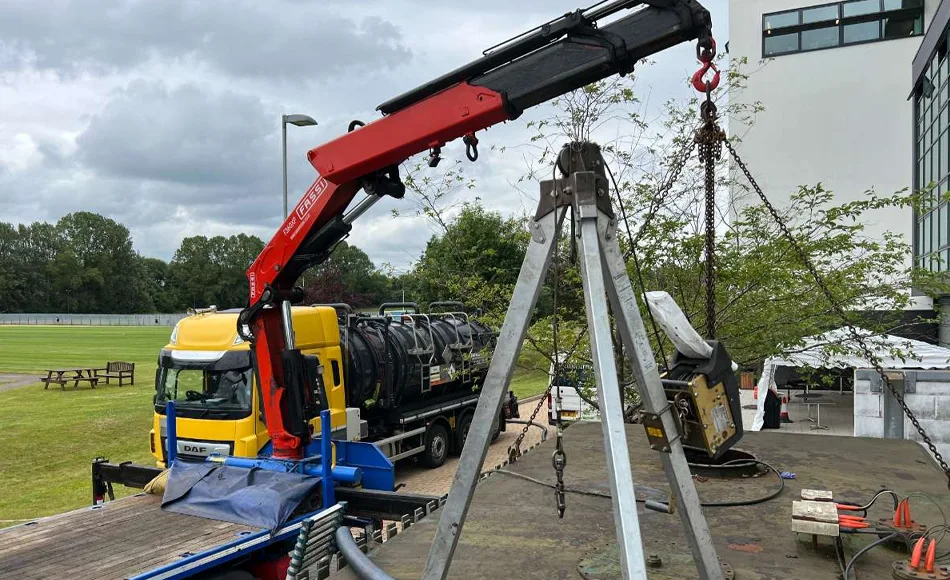
This oil tank removal highlights our approach and commitment to environmental responsibility. We began with a thorough site assessment, carefully extracted and disposed of the remaining heating oil, and then cleaned and decommissioned the tank to prevent leaks.
Why Bio Clean Jetting?
Bio Clean Jetting operates nationwide across the UK, delivering controlled removal services for domestic and small commercial sites.
- We're fully licensed with the Environment Agency (Waste Carrier Licence #CBDU140889).
- 20+ years removing oil tanks across the UK
- Eco-friendly recycling practices
- Comprehensive oil tank removal services for both domestic and commercial clients
- Removal services are available across the UK, designed to be straightforward and hassle-free
- No-fuss approach from start to finish – our specialist team ensures the service is straightforward for clients
Every oil tank removal project is delivered with safety, control, and regulatory compliance at the forefront.
Frequently Asked Questions
Contact a specialist contractor. The oil tank will be assessed, drained, isolated from connected systems, cleaned, dismantled or lifted out, and disposed of through authorised recycling facilities.
Cost depends on tank size, oil content, access, and disposal requirements. Underground oil tank removal and contaminated waste increase the overall cost.
Where heating oil remains uncontaminated, it may be filtered and reused. Contaminated oil must be disposed of through licensed facilities.
Remaining fuel is drained and either transferred for reuse or disposed of in compliance with hazardous waste regulations.
Book Your Consultation
If you have a domestic oil tank, redundant heating oil tank, or underground oil tank requiring removal, Bio Clean Jetting provides a controlled and compliant solution across the UK.
Contact our team to arrange an assessment and safe oil tank removal works.
