Industrial and Oil Tank Removal Liverpool
Any storage tank that has been used to store hazardous substances is treated as hazardous in its own right. The tank remains hazardous until the tank has been thoroughly cleaned and all residue has been removed from the inside of the tank.


Overview
In Liverpool, tank removal services cover the safe decommissioning and removal of fuel storage tanks where they are no longer required or have come to the end of their service life.
Oil tanks remain classified as hazardous until specialist cleaning has been completed and they are confirmed gas-free. The removal process includes draining, cleaning, gas freeing and dismantling, followed by safe disposal in line with current environmental regulations.
Underground tanks require additional control due to limited access and potential contamination risks. Where complete removal is not practical, tanks may be decommissioned in situ in line with relevant environmental guidance.
In Liverpool, professional tank decommissioning ensures all work is completed in a safe and controlled manner and in line with all relevant health and safety legislation as well as waste disposal regulations.
All tanks previously used to store hazardous materials must be treated as hazardous until properly cleaned. The presence of residues, sludge and vapours presents ongoing risks to safety and the environment if not handled correctly.
Bio Clean Jetting provides fully compliant tank removal services across Liverpool, ensuring all work meets environmental agency requirements. We handle all aspects including site risk assessments, tank cleaning, dismantling and licensed waste disposal.
For residential works, see our dedicated Oil Tank Removal service.
Professional Oil Tank Services
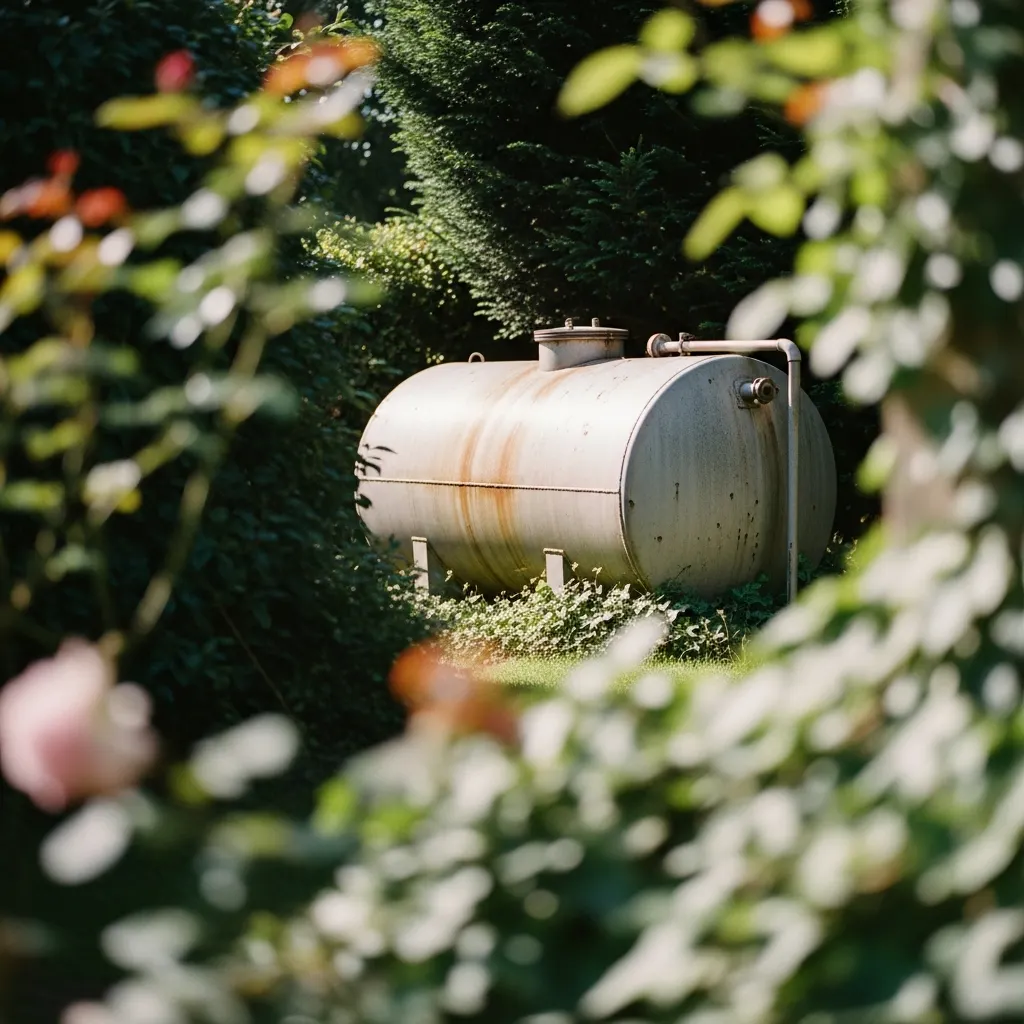
Oil tank removal across Liverpool is commonly required where tanks are no longer required, have developed faults, or are being replaced as part of heating system upgrades.
As oil breaks down over time, it can create environmental hazards if a leak develops. Controlled removal is necessary to reduce the risk of contamination and meet regulatory requirements.
In Liverpool, tank removal work is undertaken to reduce environmental risk, meet regulatory requirements and uphold site safety standards.

The Tank Removal Process in Liverpool
Each tank removal project in Liverpool starts with a thorough site assessment to determine the most appropriate and most effective method of removal.
Once the initial assessment has been completed, the tank will be cleaned internally to remove any hazardous substances and achieve gas-free certification. The tank is then safely disconnected from all services and prepared for removal.
All works are undertaken in accordance with industry standards, ensuring compliance with environmental regulations and safety requirements.
For dedicated certification services, see our page on: Gas Free Certification for Industrial Tanks.
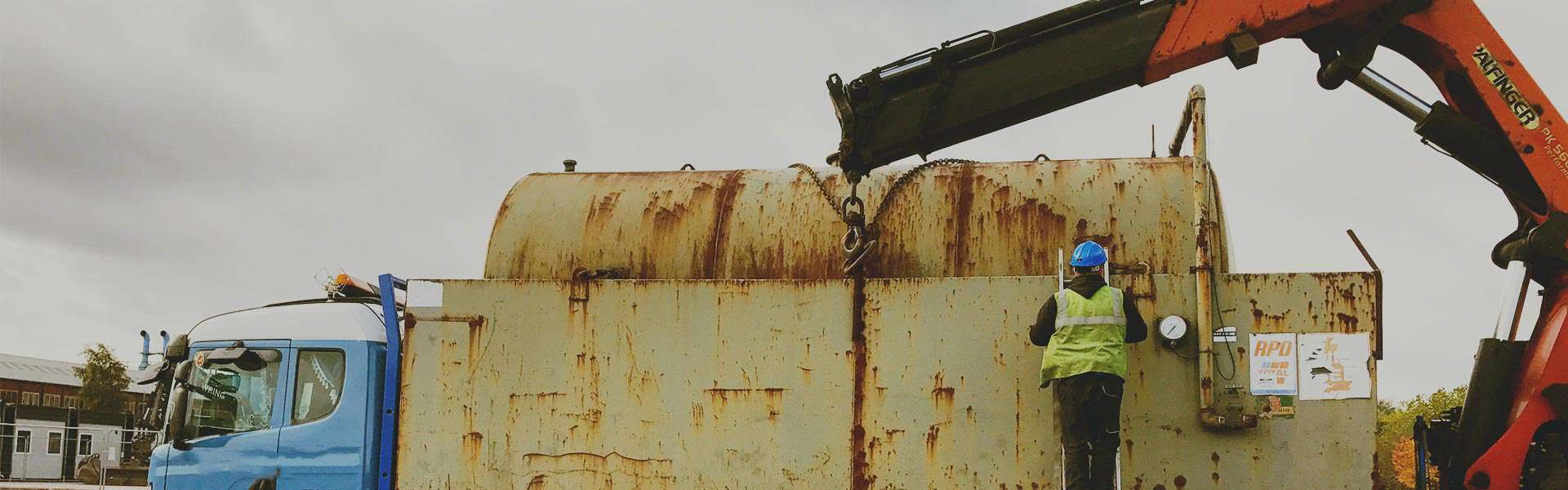
Full removal of a tank requires experienced operatives using appropriate specialist equipment for efficient and safe removal. For underground tanks, controlled excavation is usually required for removal. If removal is not feasible, safe decommissioning may include degassing followed by filling with an inert substance that secures the tank in place.
A full step-by-step breakdown is available in our Oil Tank Removal Process Guide.
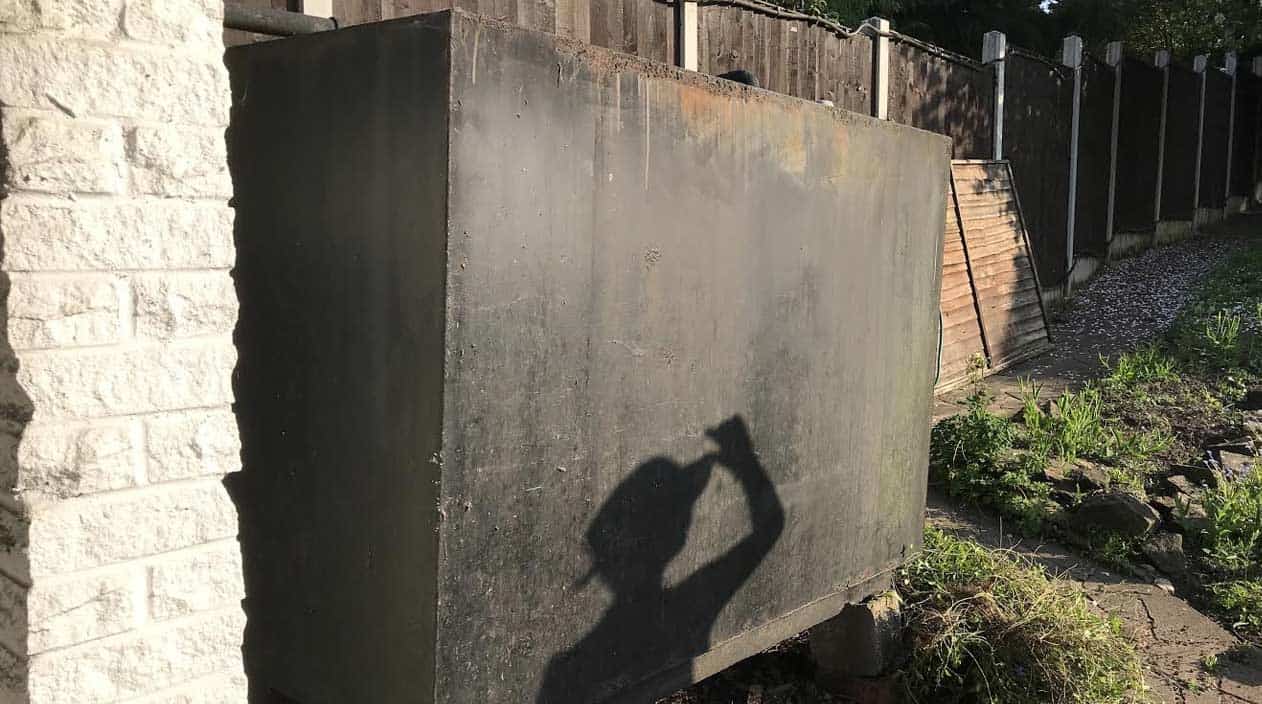
Domestic Oil Tanks and Heating Oil Tank Systems
Domestic oil tank removal across Liverpool is commonly required for residential properties where tanks are no longer required or are being upgraded.
Many older tanks present increased risk due to corrosion or loss of structural integrity, which can result in leaks and environmental damage if not properly addressed.
Our specialist tank removal services for homes include:
- Heating system disconnection carried out safely
- Removal of oil tanks and associated pipework
- Waste removal and site clean-up
- Environmental protection measures
All work is undertaken in a safe and controlled manner, ensuring compliance with current environmental regulations.

Commercial Fuel Tanks and Industrial Storage Tank Removal
In Liverpool, commercial fuel tank removal is typically required where tanks are decommissioned, being replaced or present a risk to safety and the environment.
These projects can involve additional complexity due to the size and location of the tank, along with potential contamination risks.
Industrial storage tank removal services in Liverpool include:
- Large-scale fuel and chemical tank removal
- Decommissioning of obsolete systems
- Removal of underground and bunded tanks
- Mitigation of environmental risk
With professional tank removal, compliance with current environmental regulations is maintained, helping to reduce long-term liabilities.
Why Choose us?
We have over two decades of experience supplying both commercial and domestic clients reliable, safe and value for money, industrial tank cleaning and removal services. We are located in the heart of England in Birmingham, West Midlands and are able to offer our services nationwide, throughout the U.K.
- Over 20 years’ experience
- Cost efficient service
- Consistently delivered on time and within budget
- Hundreds of tanks professionally cleaned and removed throughout the UK
- Specialist in-house team, fully trained
Our Accreditations & Certifications
At Bio Clean Jetting, we maintain the highest standards of safety, environmental responsibility, and technical expertise through our industry-recognised accreditations:

ISO 14001:2015
Certified
Our environmental management system is independently audited and certified to ISO 14001 standards (Certificate # given upon request), ensuring our operations minimize environmental impact while maintaining complete regulatory compliance.

Environment Agency Authorised
We operate as a registered waste carrier (Registration #CBDU140889), authorised to safely transport and manage industrial waste streams in full compliance with current legislation.

CHAS Accredited Contractor
Our CHAS (Contractors Health and Safety Assessment Scheme) accreditation demonstrates our commitment to excellent health and safety management and full compliance with current regulations.

Water Jetting Association Member
As an active member of the Water Jetting Association, we adhere to the industry's Code of Practice and Safety Guidelines for all high-pressure water jetting operations.

City & Guilds Qualified Personnel
Our technicians hold relevant City & Guilds qualifications in industrial cleaning operations and confined space working.

IPAF Certified
Operators
All staff using powered access equipment are IPAF trained and certified, ensuring safe operation in elevated working environments.
Underground Tank Removal
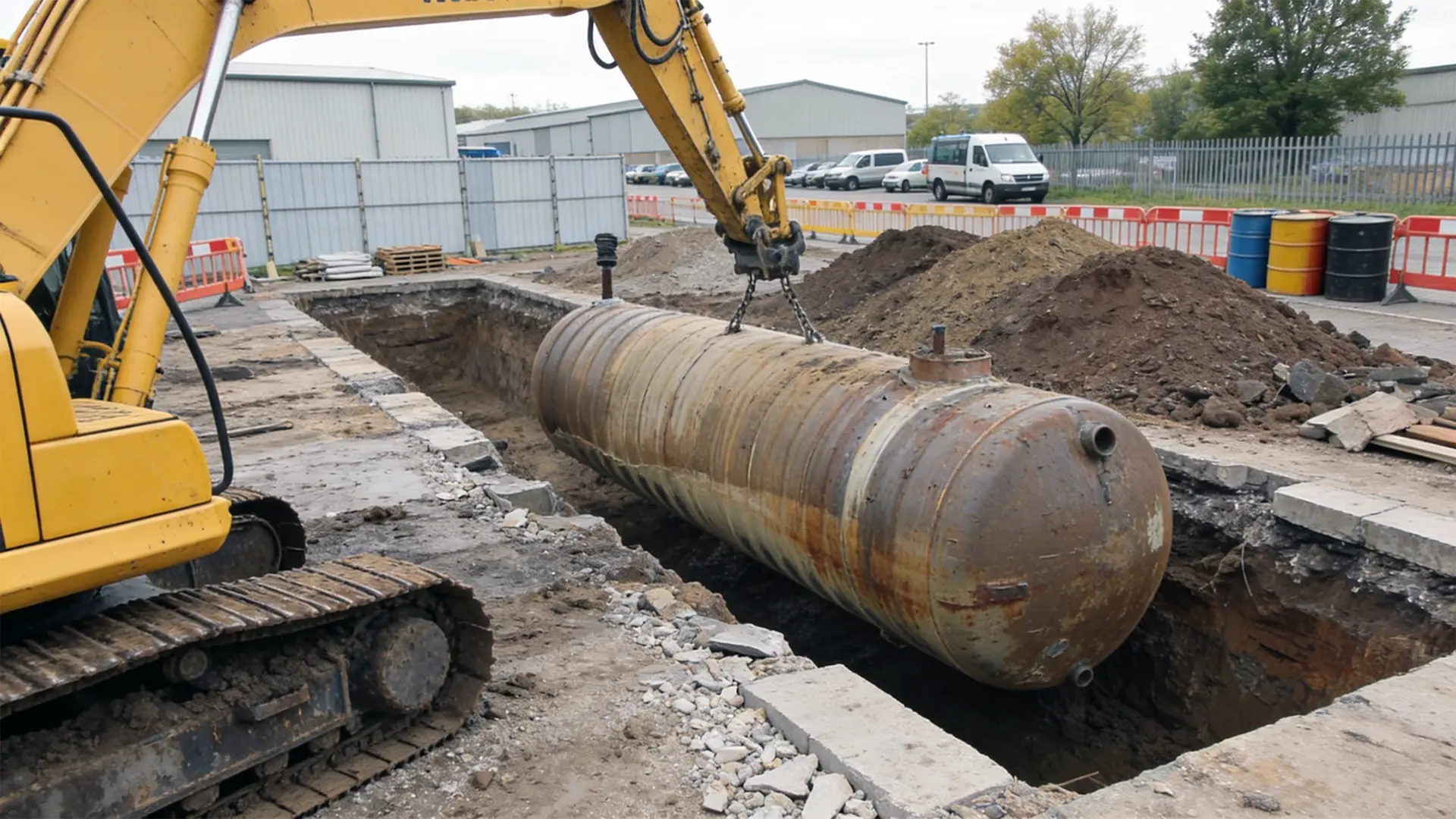
Underground tank removal across Liverpool requires specialist handling due to limited access and potential soil contamination.
Prior to excavation, tanks must be professionally cleaned and certified gas-free. Extra measures are implemented to avoid environmental damage during removal.
Our underground tank removal services in Liverpool include:
- Excavation works to expose the tank
- Removal of contaminated soil if required
- Safe removal and disposal of tanks
- Ground reinstatement
Solid Filling of Redundant Tanks
Where full removal is not feasible, tanks in Liverpool can be safely decommissioned using solid fill methods.
This method involves cleaning the tank and then filling it with an inert material to eliminate the risk of collapse or contamination.
Solid filling may be suitable where:
- Tanks are located beneath buildings or structures
- Tank removal would cause major disruption
- Long-term decommissioning is required
Removal of Previously Solid-Filled Tanks
In Liverpool, previously filled tanks may need to be removed during site redevelopment or construction works.
This process includes removing the solid fill material and the safe removal of both the tank and its remaining contents.
Our services include:
- Breaking out solid fill material
- Safe dismantling of tank structures and components
- Removal of associated pipework
- Disposal in line with environmental regulations
Disposal, Recycling and Compliance
Oil tank disposal and the disposal of all related waste must adhere to current Environmental Regulations and Waste Guidance laws.
We have established procedures for the safe handling, transportation (by licensed carriers) and disposal at approved recycling facilities of residual fuel, heating oil and hazardous substances. Responsible disposal is environmentally sound and supports long-term sustainability.
Professional tank removal ensures:
- The safe removal of all hazardous materials
- Compliance with applicable waste regulations
- Kept to a minimal environmental impact
- All necessary documentation is provided to confirm complete compliance (helping to avoid legal issues and continued environmental liability).
Safety and Risk Control
Safety is the highest priority during the removal of oil tanks and tank decommissioning. Comprehensive risk assessments are completed before any work begins, and all work is undertaken by trained operatives using suitable specialist equipment.
Safe tank removal is critical. All hazardous materials, dangerous or flammable vapour, and confined spaces encountered during works are carefully controlled and managed to ensure that both the environment and all personnel on site are protected.
When Should an Oil Tank Be Removed?
Oil tanks are to be removed if structural integrity is an issue, if a heating oil system has been replaced, or when an old tank presents potential environmental or safety concerns. The abandonment of a fuel tank or leaving it unused in place will increase the risk of contamination or make it difficult to meet regulatory compliance requirements.
Cost Considerations
Oil tank removal costs can vary significantly depending on the size of the tank, site access, how easily the tank can be safely cleaned, and whether it is above ground or underground, along with other variables that can affect removal.
Commercial oil tank removal is generally more complex than residential oil tank removal due to the nature of the removal process and the requirements for disposal of the removed tanks.
For a detailed breakdown of oil tank removal cost factors, see our dedicated Oil Tank Removal Cost Guide.
Frequently Asked Questions
How much does it cost to remove an oil tank in the UK?
Is tank cleaning required before removal?
Do you remove underground tanks?
Get a Quote Today
We take into account several things when formulating a quote for the removal of your tanks. Simply fill in the form here and we’ll get back to you within 24 hours. Alternatively call us on: 0121 493 2332.
Oil Tank Assessment
Answer a few questions to determine if your oil tank needs removal
The Premier Tank Removal Company in Liverpool
Phone: 0121 493 2332
SERVICES AVAILABLE throughout Liverpool
- Aigburth, L17, L19
- Allerton, L18
- Anfield, L4, L5, L6
- Belle Vale, L25
- Broadgreen, L14, L16
- Canning, L8
- Childwall, L16
- City Centre, L1, L2, L3, L6, L7, L8
- Clubmoor, L11, L13
- Croxteth, L11, L12
- Dingle, L8
- Dovecot, L14
- Edge Hill, L7
- Everton, L3, L5, L6
- Fairfield, L6, L7
- Fazakerley, L9, L10
- Garston, L19
- Gateacre, L25
- Grassendale, L19
- Greenbank, L17, L18
- Hunts Cross, L25
- Kensington, L6, L7
- Kirkdale, L4, L5, L20
- Knotty Ash, L14
- Mossley Hill, L18
- Norris Green, L11
- Old Swan, L13
- Orrell Park, L9
- Princes Park, L8
- Sefton Park, L17
- Smithdown, L7, L15
- Speke, L24
- St Michael’s, L17
- Stoneycroft, L13
- Toxteth, L8
- Tuebrook, L6, L13
- Vauxhall, L3, L5
- Walton, L4, L9
- Wavertree, L7, L15
- West Derby, L12
- Woolton, L25
Latest Tank Removal Articles